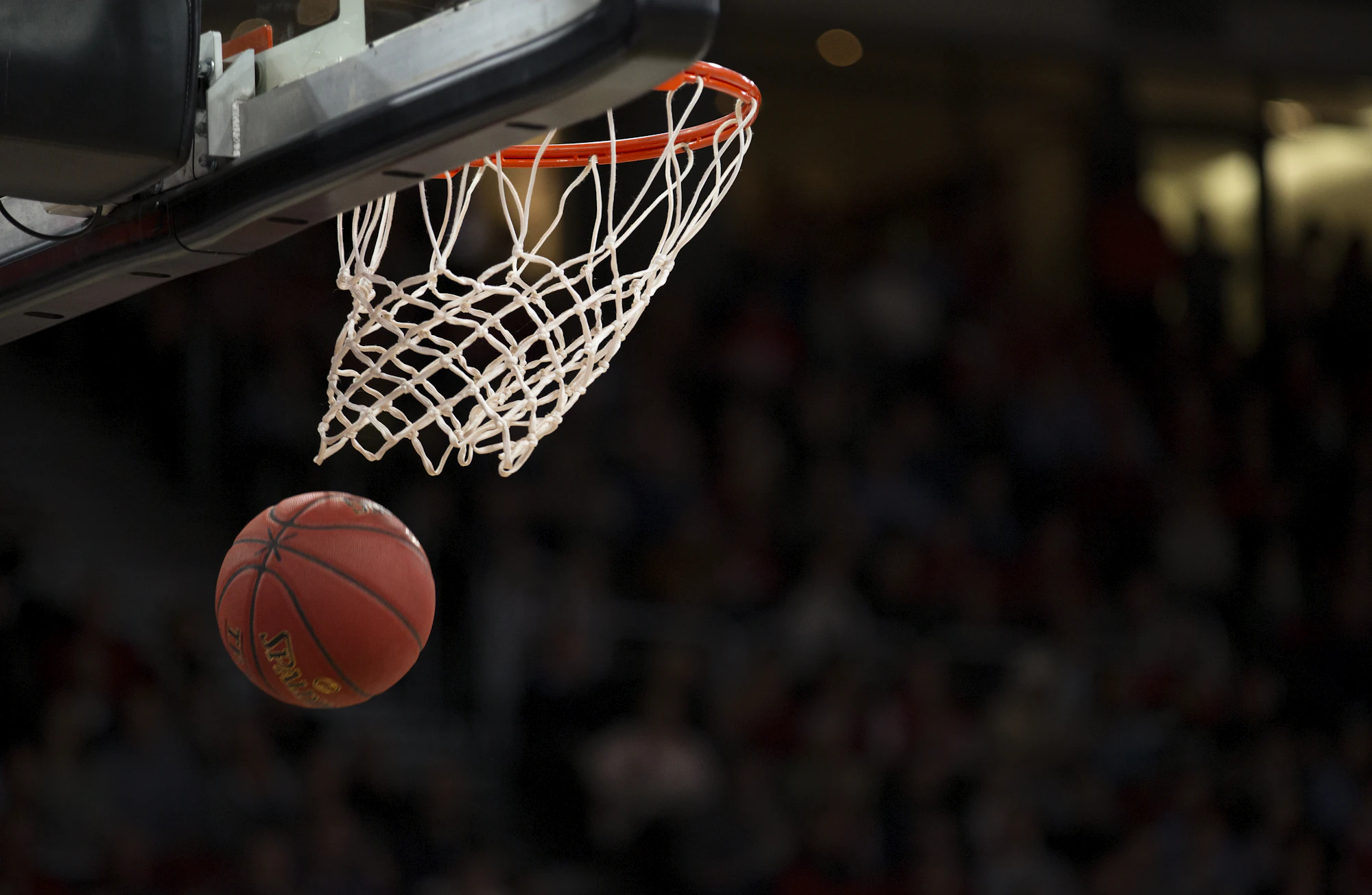
Basketball court flooring
Basketball court flooring installation, engineered for the game.
FIBA-approved, EN14904 Category A3/A4 hardwood systems installed across UK schools, leisure centres and professional clubs since 1994. 850+ courts delivered, fully ESFA-compliant, with game-line marking and refurbishment in-house.
If you're specifying a school sports hall, a leisure-centre multi-court or a professional training facility, the question that keeps coming back is the same one: what flooring system delivers FIBA-grade ball bounce without breaking an ESFA budget?
For the vast majority of UK halls we survey, the answer is an EN 14904 Category A3 or A4 area-elastic hardwood system, professionally installed and game-line marked to FIBA spec.
What basketball court flooring spec — do you actually need.
Three numbers decide most basketball flooring choices in the UK: the court footprint, the EN 14904 force-reduction category, and whether the subfloor is floating or anchored. Get those right and the rest follows.
- FIBA-spec court: 28m × 15m playing area with 2m run-off — typical for clubs and competition halls.
- ESFA-spec sports hall: 32m × 17m, with overlay markings for basketball, badminton, netball and volleyball.
- EN 14904 A3 (force reduction 25–35%) suits multi-use halls and PE-led usage.
- EN 14904 A4 (35–45%) suits high-impact basketball-led usage and competition floors.
- Floating subfloor: best for schools (faster, less disruptive, lighter on existing slabs).
- Anchored subfloor: best for permanent professional courts where peak performance is non-negotiable.
Our basketball court installation process.
Every basketball install we run follows the same EN 14904-aligned workflow. Most school halls complete in two to three weeks; a fast-track summer-holiday turnaround is available for almost any state-funded facility.
Site survey & EN 14904 baseline
Measure existing slab, environment, lighting and acoustic profile. Confirm the right Category and surface system for the use case.
Subfloor preparation & moisture testing
Moisture readings, levelness checks, and remediation if values exceed manufacturer thresholds. Non-negotiable.
System build-up
Vapour barrier, resilient pads or batten subfloor, structural panel, finished hardwood — laid in sequence with proper expansion gaps.
Sand & finish to FIBA tolerance
Installation to a 1/32 inch (0.8mm) tolerance — the level FIBA expects for true ball bounce. Sealed and finished in two coats.
Game-line marking
Basketball plus secondary sports if multi-use. Painted lines cure into the finish and last the lifetime of the floor.
Logo & centre-circle branding
Painted or inlaid. Inlaid is the longer-lifecycle choice; painted is faster and refinishes easily.
Sign-off, warranty & maintenance plan
EN 14904 retest at handover, signed warranty pack, and a maintenance plan tailored to your usage pattern.
Game-line marking and multi-sport overlays.
Almost every UK basketball court we install carries secondary sport markings. Done well, multi-sport overlays read clearly under playing conditions; done badly, they confuse referees and frustrate players.
- FIBA-spec basketball lines: 5cm wide, perimeter, three-point arc, key, free-throw and centre circle.
- Common overlays: basketball + badminton + volleyball + netball, painted in distinct colour families.
- Painted markings (recommended): cure into the finish, last the lifetime of the floor, repaintable on refurb.
- Taped markings: only for short-term or temporary configurations — not recommended for permanent multi-use.
Basketball
Highest-frequency sport gets the strongest contrast — typically black or deep navy on sealed maple. 5cm-wide, FIBA-spec.
Badminton
Drops to a second contrast tier in a contrasting blue or green family. Reads clearly under hall lighting without competing with the primary.
Netball
Sits at the same tier as badminton, in a third colour family — typically deep green so it doesn't conflict with badminton blue.
Volleyball
Infrequent-use sports drop to a low-saturation colour so they're present without adding visual noise during basketball or badminton play.
Court line hierarchy preview
Toggle sports to see how the hierarchy reads on a single multi-sport floor — primary contrast for basketball, distinct colour families for the rest.
The rule we apply is: the highest-frequency sport gets the strongest contrast, secondary sports drop to the second tier, and tertiary lines use a low-saturation colour. We agree the hierarchy with the facility manager during survey — not after the paint is down.
Refinishing an existing basketball court.
Most UK basketball courts reach a structural mid-life around year 12. At that point the right call is usually a sand-and-recoat rather than a full replacement. We run that workflow in-house — see the dedicated refinishing page for the full decision tree.
- Trigger: visible wear in the finish, dulled ball bounce, scratches deeper than 2mm, or scheduled mid-life refurb.
- Full sand-and-recoat including game-line repaint takes 5–10 days for a typical school hall.
- Dustless sanding equipment lets us work without closing adjacent rooms.
- Choice of water-based or oil-modified polyurethane finish — water-based recommended for schools (faster cure, lower VOC).
- EN 14904 retest at handover to confirm the floor still meets its original certification category.
Related sports flooring guides
FAQ
Common questions
Everything decision-makers ask about basketball court flooring before committing.
Typical installations run 2–3 weeks from first day on site to sign-off, including subfloor preparation, system installation, finish coats, and line marking. Fast-track summer-holiday turnarounds are possible for most school halls — we plan these against the school calendar at survey stage so the floor is ready for the first day of term.
FIBA Approval is the international ball-rebound and surface-performance certification for basketball flooring. An approved system has been tested by FIBA's accredited laboratories for ball bounce consistency, friction, and shock absorption. For UK schools and clubs the practical value is twofold: it future-proofs the hall for affiliated competition use, and it's a defensible spec line for any procurement panel asking why one system was chosen over another.
Both are area-elastic categories — they differ in how much the surface absorbs impact. EN14904 A3 returns 25–35% force reduction, A4 returns 35–45%. A3 is the right choice for most multi-sport school halls; A4 suits basketball-led leisure centres and clubs where players spend significantly more time landing on the floor. We help facility managers pick the right category during the survey by walking the use case through a spec checklist.
Yes — summer holidays are the most common installation window for state-funded school halls in the UK. We can complete a typical 32m × 17m hall, including line marking, in well under the six-week summer break. We'll plan the install against term-end and term-start dates at survey, and confirm a date with a buffer for moisture testing.
Yes. Our base is in London but we install across the UK — schools and leisure centres in the Home Counties, the Midlands, the South West and beyond. London projects move first because of logistics, but national projects book in at the same survey-and-quote standard.
UK basketball court installations typically range £60–£130 per square metre depending on system category, subfloor type, and line-marking complexity. A 32m × 17m school hall sits at the lower end; a fully anchored A4 club court at the upper end. We provide itemised quotes after a free site survey rather than headline figures, because hidden subfloor work is the largest variable in any number.
All our basketball court installations carry a 12-year structural warranty on the subfloor and surface system, with a separate 5-year warranty on the line marking and finish. We honour warranties in writing, against the original specification, and the warranty document names the EN14904 category the floor was certified to at handover.
Daily dust-mopping, weekly damp-mop with a manufacturer-approved cleaner, an annual deep clean, and a recoat every 3–5 years depending on usage. We provide a written maintenance plan at handover, calibrated to your hall's usage pattern.
Specifying a basketball court?
Send us your hall dimensions and use case. We'll survey on site, confirm the right EN14904 category for your usage, and quote against an itemised spec — no headline figures, no surprises.